
Many of the most exciting applications for virtual reality are occurring in the field of healthcare. VR is helping to improve the emotional wellbeing of people with dementia, speed the recovery of people suffering from PTSD or other trauma-related conditions, and to help others to overcome phobias or manage pain.
As we learn more about VR and how it interacts with our mind and body, further applications and treatments are emerging.
People with dementia often feel shut out from the present, leading to loss of self-esteem anxiety and depression. Pioneering VR work is recreating vivid and immersive experiences that take people back to familiar times and places.
The recall of events, people and places is impressive as the VR experience reaches into the undamaged long term memory. Above all, the experience of being transported back to a situation where they feel at home and connected is extraordinarily uplifting. The feeling of enhanced wellbeing endures even though the person may forget the experience of wearing the VR headset and being transported back in time.
Immersive Therapy
Immersive therapy can help people suffering with PTSD by building a 3D representation of situations that triggered their condition. This can help the process of deactivating deep-seated and powerful emotions and reflexes. Similar methods help distract people from chronic pain or retrain their brains to adopt different behaviours designed to reduce the severity of conditions such as anxiety, eating disorders, ADHD and autism.
People with high functioning autism are often highly intelligent and capable but struggle in situations that demand interpersonal skills and the ability to handle stress, such as job interviews. VR gives then the opportunity to practice and hone their skills in immersive realistic scenarios but without the high stakes of potential failure.
Therapy options for people suffering from, for example, acute fear of heights or crowds, have up till now been limited. Reproducing anxiety-inducing situations in a safe environment wasn’t possible. VR has the ability to change that, opening new possibilities for more effective treatments.
Accessible Technology
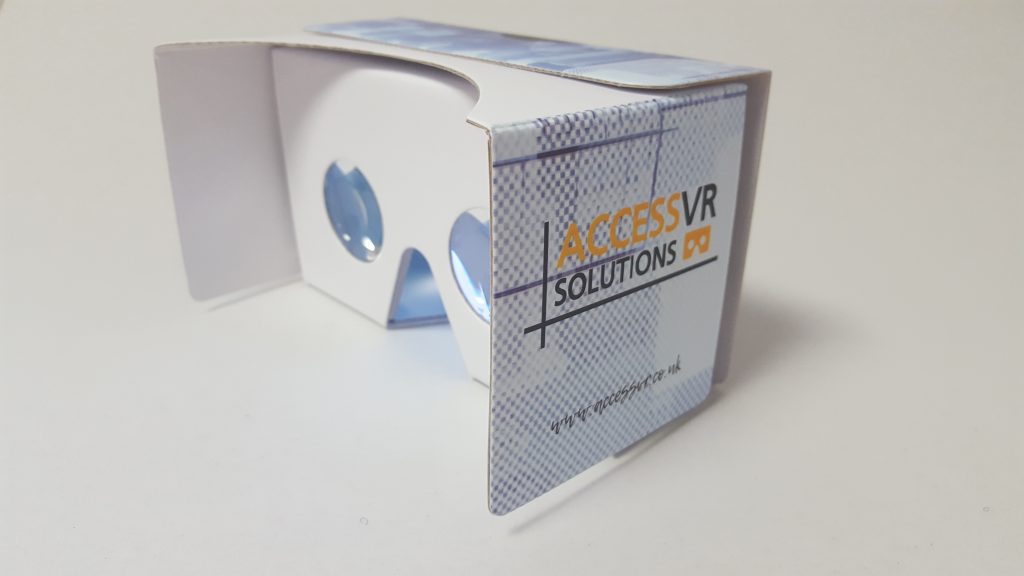
Thanks to technology such as Google Cardboard the cost of entry to VR is coming down. Applications can be made accessible to almost anyone in their own homes or any care setting.
And as new applications increase demand it’s inevitable that the cost of high-end VR headsets will also come down. The challenge now is to bring together clinicians and therapists with the people such as the technology specialists at AccessVR who can develop the applications. The possibilities then become almost without limit.
If this got you thinking about how VR could work in a care setting, talk to AccessVR and explore what’s possible.